WHAT IS WALDORF EDUCATION
Founded in 1919 in Stuttgart, Germany by Rudolf Steiner, Waldorf education is rooted in a holistic, hands-on, artistic approach to nurturing childhood curiosity and individuality. Through developmentally appropriate, experiential, and academically rigorous education, it aims to inspire lifelong learning in all students and to enable them to fully develop their unique capacities.
WHAT MAKES WALDORF DIFFERENT
-
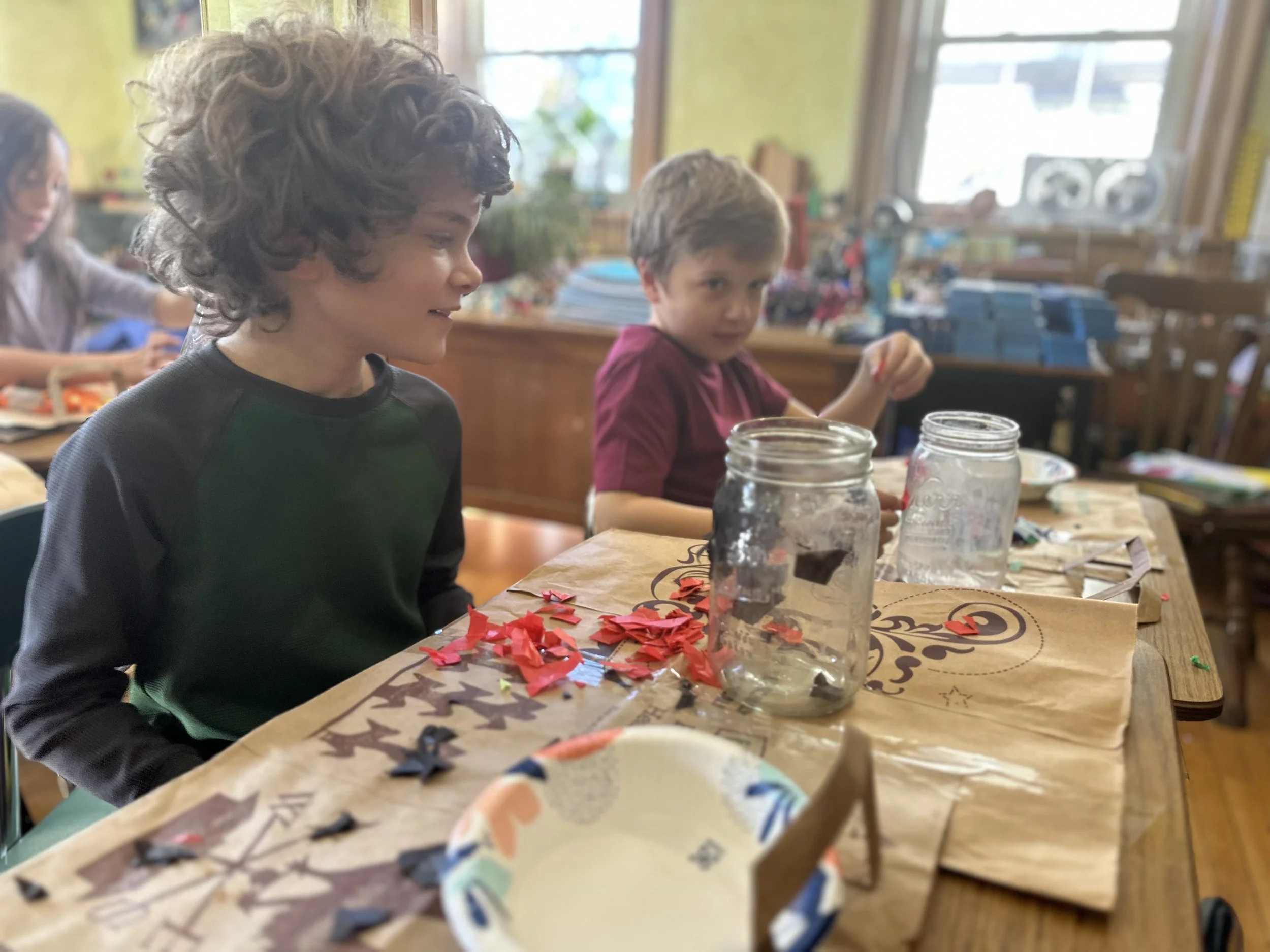
Arts-Integrated Curriculum
Students are immersed in the arts every day through engaging experiences in visual arts, music, theatre, handcrafts, woodworking, and movement. These artistic expressions are thoughtfully woven throughout the academic curriculum, enriching mathematics, language arts, and the sciences alike. Few educational approaches place such a central emphasis on learning through artistic practice. By bringing lessons to life through the ever-renewing arts, students deepen understanding, strengthen imagination, and enliven every area of study.
-
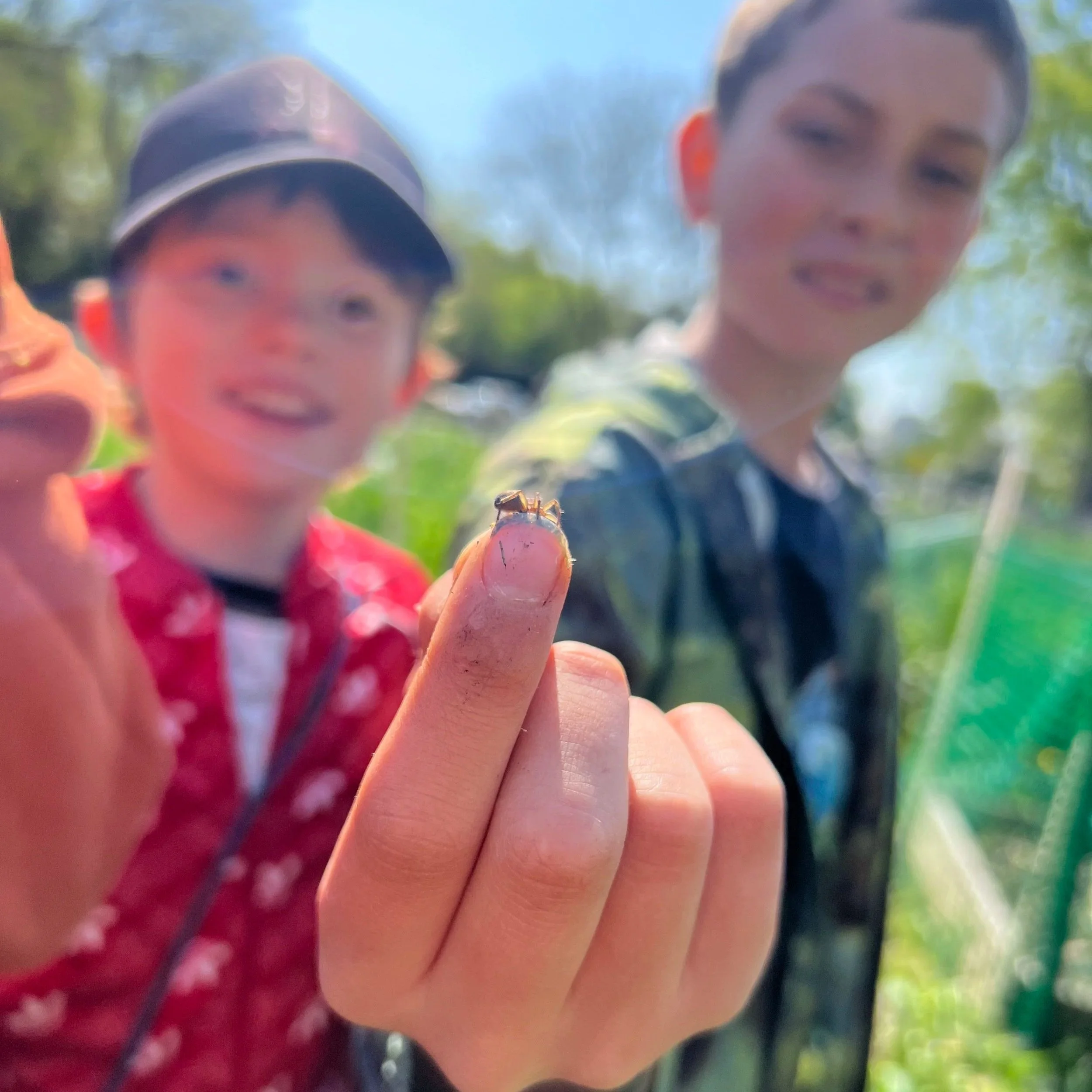
Outdoor Exploration
Waldorf students spend significant time outdoors—far more than the typical student, exploring their surroundings and taking frequent neighborhood field trips. These experiences foster a living connection to place, deepen students’ relationships to their community, and awaken social awareness. Time outdoors strengthens observational skills and invites curiosity, turning the natural world into a dynamic classroom. Students develop physical resilience, coordination, and confidence through movement and exploration, while fresh air and seasonal rhythms support emotional balance and overall well-being. By engaging directly with their environment, students cultivate a sense of stewardship, responsibility, and belonging that carries into all areas of learning.
-
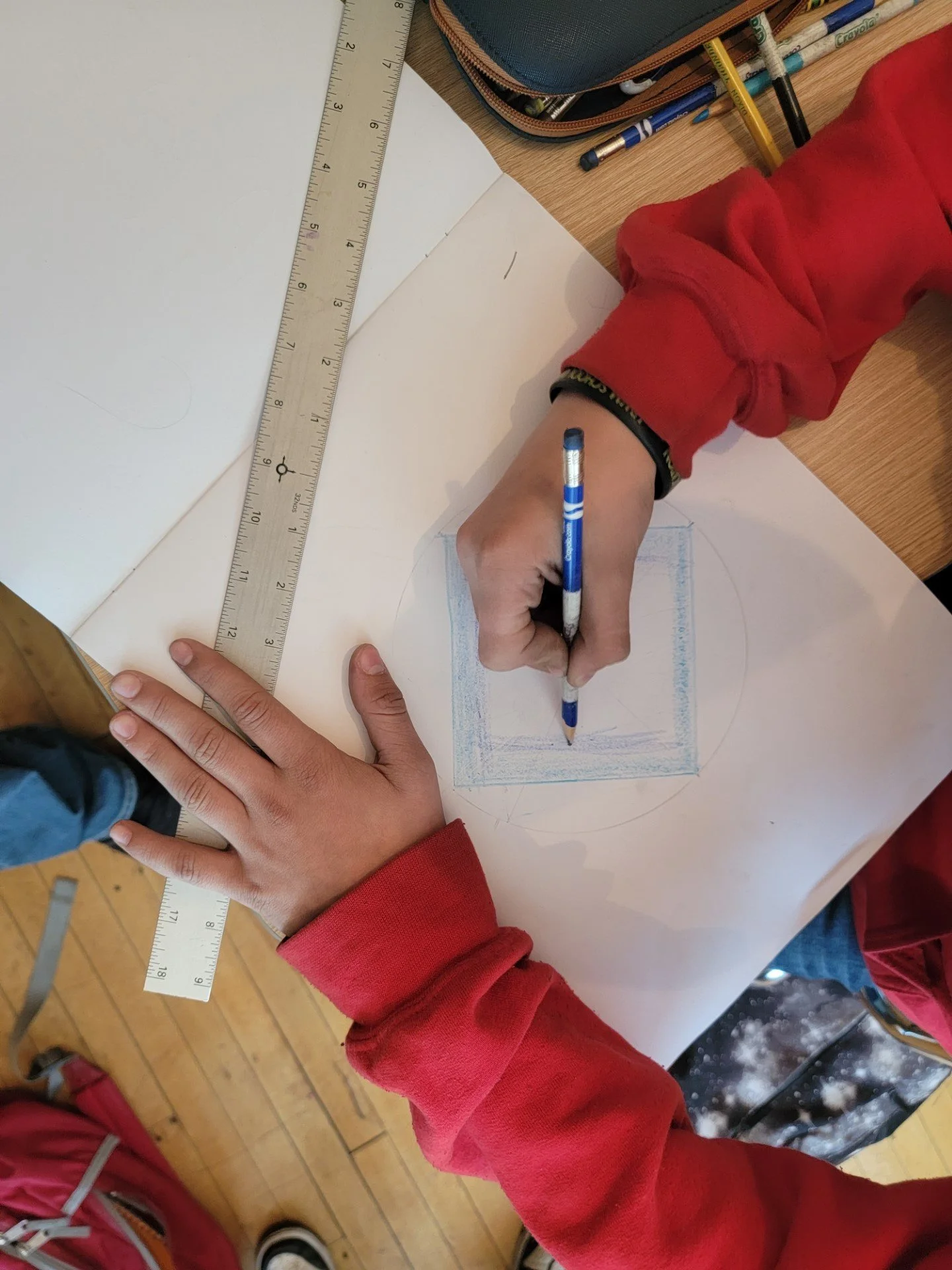
Delayed Technology Use
There are no computers or screens of any kind in the lower grade classrooms (early childhood through 5th grade). The aim is for students to experience the natural world and the social world through their senses and imaginations. They are shown how to express that learning competently, comprehensively, and artistically. Once students are taught critical research methods and have established deep interpersonal responsibility, they are introduced to technology in the upper grades. We live in a world full of technology and have found that Waldorf graduates have no difficulty mastering useful technology after they have advanced beyond the middle school classroom.
-
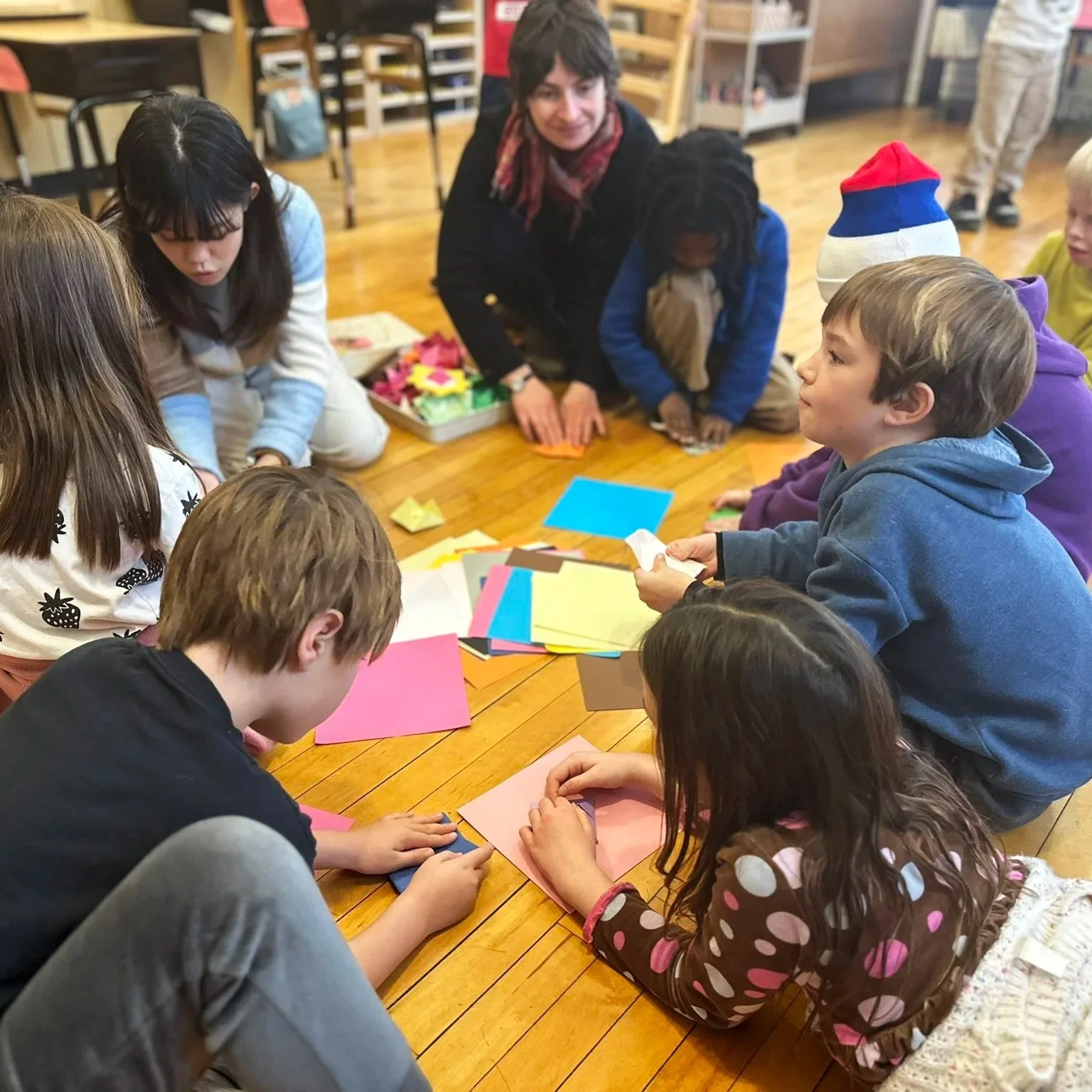
Lasting Classroom Bonds
In Waldorf education, teachers and students remain in the same cohort beginning in first grade through fifth grade. This continuity allows the teacher to develop a deep understanding of each child’s temperament, learning style, strengths, and challenges, as well as the unique social dynamic of the class as a whole. Over time, this consistent relationship fosters trust and emotional security, creating a classroom environment where students feel seen, supported, and understood. Teachers can tailor instruction to meet the evolving developmental needs of the group and of individual students. This long-term partnership also strengthens communication with families and caregivers.
-
Morning Block Lessons
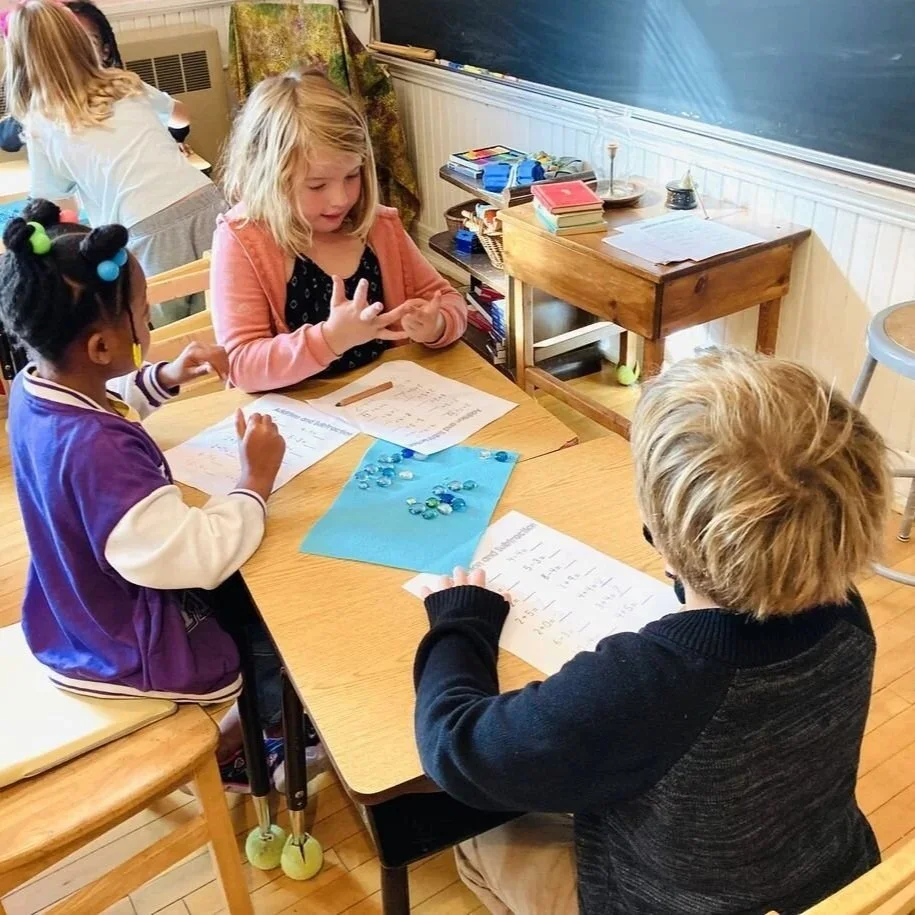
The morning block is a two-hour lesson at the start of each school day where students are emersed in the main topic is presented. The subject—be it math, Greek history, botany or writing—is taught for a three or four week block, then put aside, often to be continued later in the term, or with smaller practice sessions interspersed. This allows students to take a deep dive into one topic, and keeps learning fresh, giving children time to digest what has been learned before returning to the subject.
-
Student Lesson Books
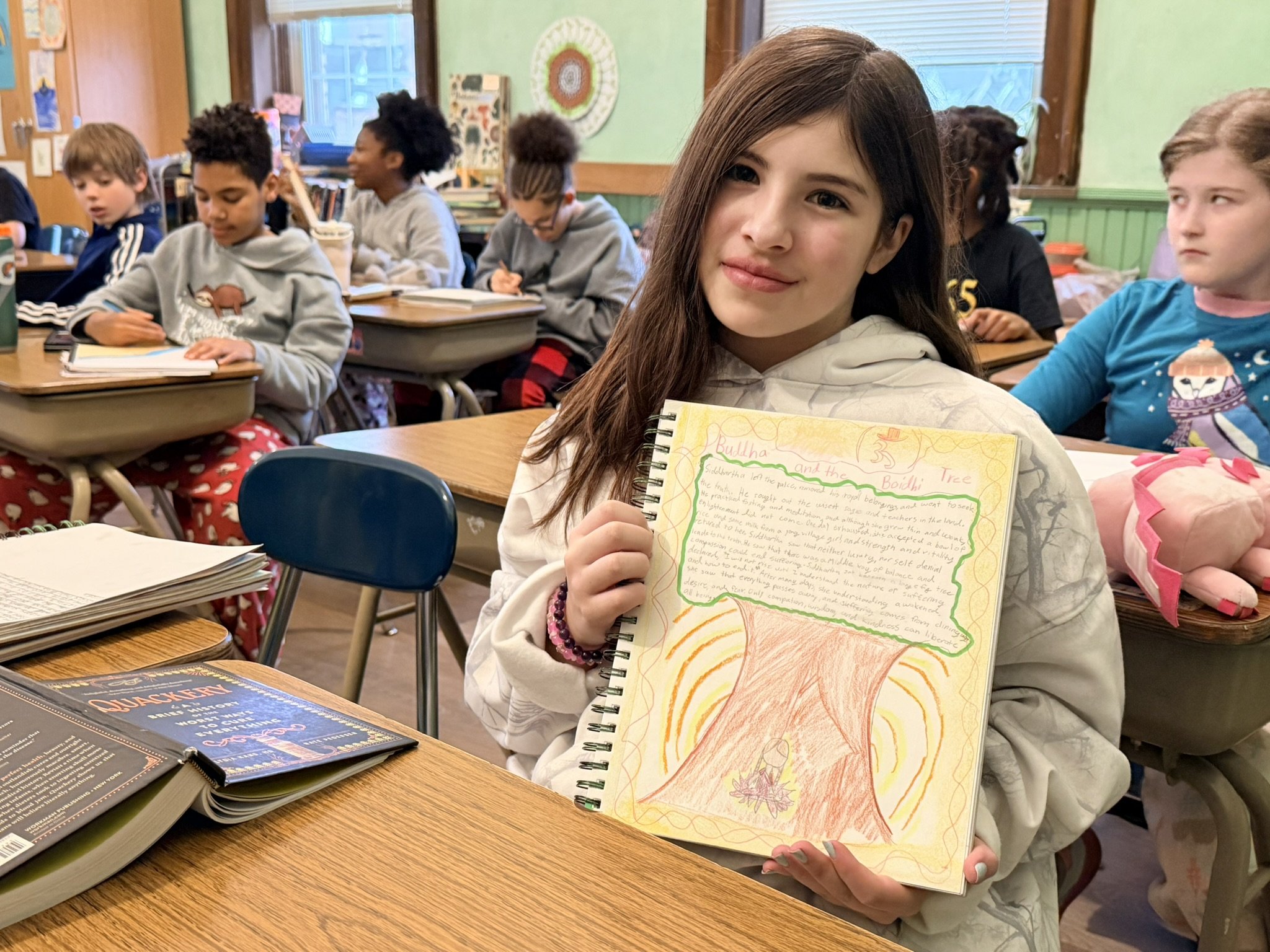
In Waldorf education, there are no traditional textbooks. Teachers create each lesson and the children illustrate their own individual main lesson books. A child’s lesson book becomes a tangible representation of their individual developmental and artistic growth throughout the year and serves as their unique educational journey. Main lesson books are built slowly over the course of a block, with the guidance of the teacher, and include both written and artistic illustrations of what they have learned.
Your Questions, Answered
Exploring educational choices in today’s world can be overwhelming. Our staff is always available to help answer questions, and give additional information as you navigate the right path for your family’s needs. We invite you to reach out at anytime, 414-277-0009 or office@tamarackwaldorf.org.
-
Parents often explore both Waldorf and Montessori options because of their educational similarities. Both are private schools model that focus on respecting child development, inspiring curiosity, and engaging in hands-on learning. However, the way they approach this distinctly varies. For more on the specific differences, read more here.
-
Waldorf education typically introduces formal reading instruction around age seven. This allows young children to benefit from play, movement, imagination, and oral language experiences. Literacy develops gradually through storytelling, drawing, and writing before reading. Children build rich vocabularies by listening to fairy tales and myths, then begin expressing ideas through pictures that evolve into letters and written words. Once they can write and recognize their own words, reading emerges naturally. Waldorf educators believe this approach nurtures a lifelong love oflearning while avoiding the pressure of introducing abstract academics too early, and avoiding burnout. Formal reading often begins in first or second grade, and many children catch up to their traditionally schooled peers by third or fourth grade.
-
Waldorf education limits or discourages the use of electronic media (tablets, TVs, and computers) in early childhood to protect imaginative play, creativity, problem-solving, and social development. Instead, students learn through hands-on experiences such as outdoor exploration, art, handwork, movement, and interactions with others. Waldorf educators believe that active, imaginative play builds stronger cognitive and social skills than passive screen use, and there is growing evidence to support this. Technology is introduced thoughtfully as a tool for learning, with an emphasis on responsible and purposeful use. Digital literacy are formally introduced in the upper grades.
-
Tamarack Waldorf School is a welcoming community that includes families of many ethnicities, races, cultural and religious traditions, socio-economic backgrounds, gender identities, sexual orientations, and family structures. Located in the heart of Milwaukee, our student body reflects the rich racial, ethnic, and economic diversity of our city.
As a longtime participant in the Milwaukee and Wisconsin Parental Choice Programs, we are proud to make a Waldorf education accessible to families from a wide range of backgrounds and experiences. We believe that a diverse community enriches learning, broadens perspectives, and helps children develop empathy, understanding, and a deep appreciation for the world around them.
-
In traditional Waldorf education, a class teacher usually stays with the same group of students from first through eighth grade, which allows for deep teacher-student relationships. At Tamarack, our students stay with the same teacher and same cohort of children from grades 1-5. At the upper grades students will have a new class teacher each year, but will start to have different teachers core subjects, in addition to their specials.
-
Waldorf curriculum does not use traditional text books or pre-printed material for their learning material. Instead, teachers create customized lessons, and students create their own illustrated "main lesson books" based on what they hear and learn. These main lesson books become a personalized, tangible record of each child’s educational journey.